Exporting Produce Between the U.S. and Canada
The fresh fruit and vegetable trade between the US and Canada is massive on both sides, with billions of dollars worth of produce going back and forth. In 2024 alone, Canada imported around $5.5 billion in fresh produce from the U.S. and exported around $4.5 billion in fresh produce to the U.S. [1]. 2025 brings a new reality as the political climate in  the U.S. introduced a 25% tariff on many Canadian goods, and in retaliation, Canada has implemented the same for many goods coming from the U.S.
In addition to fears of a trade war between the two countries, both sides are introducing stricter food safety enforcement. In this guide from Thunderbird Plastics, we will cover the latest tariff exemption rules and the latest cross-border import/export regulations for fresh produce. We will also discuss how our reusable plastic crates are the right packaging to help farmers streamline compliance and reduce risk.
Tariffs and Trade Rules for US-Canada
In early 2025, concerns of a trade war rose as the U.S. introduced new tariffs of 25% on Canadian goods and a 10% levy on energy products. However, on March 6, 2025, U.S. President Trump declared that, temporarily, all imports that are compliant with the USMCA (United States-Mexico-Canada Agreement) rules of origin are exempt from these tariffs [2]. Recent updates from the Trump administration have reaffirmed that this exemption remains in place, but on August 1, 2025, tariffs on non-USMCA-compliant goods were raised from 25% to 35% [3].
On August 22, 2025, Canadian Prime Minister Mark Carney announced that Canada will align with Trump’s tariff exemption rules and effective September 1, 2025, goods that meet CUSMA rules of origin will not be subject to a 25% tariff [4]. However, tariffs on U.S. vehicles, steel, and aluminum will remain in place [5].
In short, CUSMA/USMCA-compliant imports from the U.S. into Canada are tariff-exempt, except for vehicles, steel, and aluminum. Imports from Canada into the U.S. that provide a valid CUSMA/USMCA certification of origin are exempt from 35% tariffs.
Importing and Exporting Fresh Fruits and Vegetables from the U.S. and Canada in 2025
 The good news for farmers exporting from both sides of the border is that fresh fruits and vegetables and other processed items like juice, packaged foods, and certain agricultural supplies are exempt from tariffs (if supported by a proper USMCA/CUSMA certification of origin).
Fresh Fruit and Vegetables Entering Canada from the U.S.; Canadian Importer’s Responsibility and Product Requirements
When bringing farm products into Canada, it is important to verify specific requirements based on species, packaging, and origin using the Canadian Food Inspection Agency’s (CFIA) Automated Import Reference (AIRS) [6]. However, all fresh fruits and vegetables entering into Canada must comply with the Safe Food for Canadians Regulations (SFCR) and the Food and Drug Regulations (FDR). The Canadian buyer or importer must hold the SFCR license and, unless exempt, must be a member of the Fruit and Vegetable Dispute Resolution Corporation (DRC). Carriers must provide pre-arrival information through CBSA’s ACI/eManifest, while importers or their brokers must submit an Integrated Import Declaration (IID) via the Single Window system with required CFIA data before arrival.Lastly, when exporting from the U.S. into Canada, apples, onions, and potatoes require an inspection certificate issued by the United States Department of Agriculture (USDA).
Pesticide and Sulfite Restrictions
Fresh fruit and vegetables entering Canada must meet Canada’s maximum residue limits (MRLs). Fresh produce treated with sulfites cannot be sold in Canada, with the exception of grapes.
Labelling Requirements
U.S. exporters must label their products following Canadian rules. The label must be in both English and French and must display the product grade and identify standards. Net quantity must be included in metric units, and the country of origin must be stated clearly [7].
Fresh Fruits and Vegetables Entering the U.S. From Canada; U.S. Importer’s Responsibility and Product Requirements
 When bringing fresh fruits and vegetables into the United States from Canada, it is important to verify the specific requirements for the commodity through the USDA Agricultural Commodity Import Requirements (ACIR) database and the Food and Drug Administration (FDA) import requirements. All shipments of fresh fruit and vegetables must meet U.S. food safety and import regulations, including the FDA Food Safety Modernization Act (FSMA), which may require the importer to maintain a Foreign Supplier Verification Program (FSVP) to ensure that the foreign supplier’s production meets U.S. safety standards [8]. Additionally, rules set forth by the USDA Animal and Plant Health Inspection Service (APHIS) must be followed, including phytosanitary or inspection certificates for regulated commodities such as apples, potatoes, and grapes. Certain commodities such as onions, potatoes, and tomatoes are also subject to Section 8e grade and inspection requirements [9].
Lastly, prior to the shipment arriving at the border, notice of the incoming shipment must be provided to the FDA.
Pesticide and Sulfite Restrictions
All fresh fruits and vegetables imported into the U.S. must comply with maximum residue limits (MRLs) for pesticides set by the U.S. Environmental Protection Agency (EPA). The FDA may test pesticide residue limits at the border [10]. Sulfites are permitted in the U.S. but are prohibited on fresh fruits and vegetables that are intended to be eaten raw, such as lettuce or grapes [11].
Labeling Requirements
Packaging for fresh fruits and vegetables entering the U.S. must be suitable for contact with food. Any labels, adhesives, or inks must meet FDA-approved food-contact standards [12]. According to the Fair Packaging and Labeling Act (FPLA), each container or packaging label must identify the contents, the name and place of business of the manufacturer, the packer, the distributor, and the net quantity of contents in both metric and U.S. customary units [13]. Lastly, to qualify for tariff exemption, USMCA origin must be shown with a country of origin label and a valid USMCA certification of origin. Regardless of tariffs, the Country of Origin Labeling (COOL) law requires all imports into the U.S. to state the country of origin [14].
Refrigeration (Cold Chain) Requirements at the Canada and U.S.A. Border
A cold chain is a temperature-controlled supply chain system in which a consistent refrigerated temperature in maintained throughout all modes of transport until the shipment reaches its destination. While both countries’ food safety regulating bodies do not universally require a cold chain for fresh fruits and vegetables, both nations are aligned in that it is required when it prevents spoilage, pests, and disease.
The Animal and Plant Health Inspection Service (APHIS) is a branch of the USDA that jointly conducts inspections with U.S. Customs and Border Protection at U.S. borders to prevent pests, diseases, and invasive species [15]. If the USDA-APHIS determines that a certain commodity requires a cold chain for phytosanitary treatment (for pest control), then the enforcing officers at the U.S. border will include this as part of their inspection [16].
Much like U.S. requirements, cold chain temperature standards are set as part of food safety and phytosanitary requirements. The Canadian Food Inspection Agency (CFIA) sets these requirements under the Safe Food for Canadians Regulations (SFCR) [17].
Why Farmers Use Reusable Plastic Crates for Exports into the U.S. and Canada
No ISPM-15 Hassle
The International Plant Protection Convention (IPPC) is an international treaty under the Food and Agriculture Organization of the United Nations. Their main purpose is to prevent the spread of pests by developing and promoting International Phytosanitary Measures (ISPMs) [18].
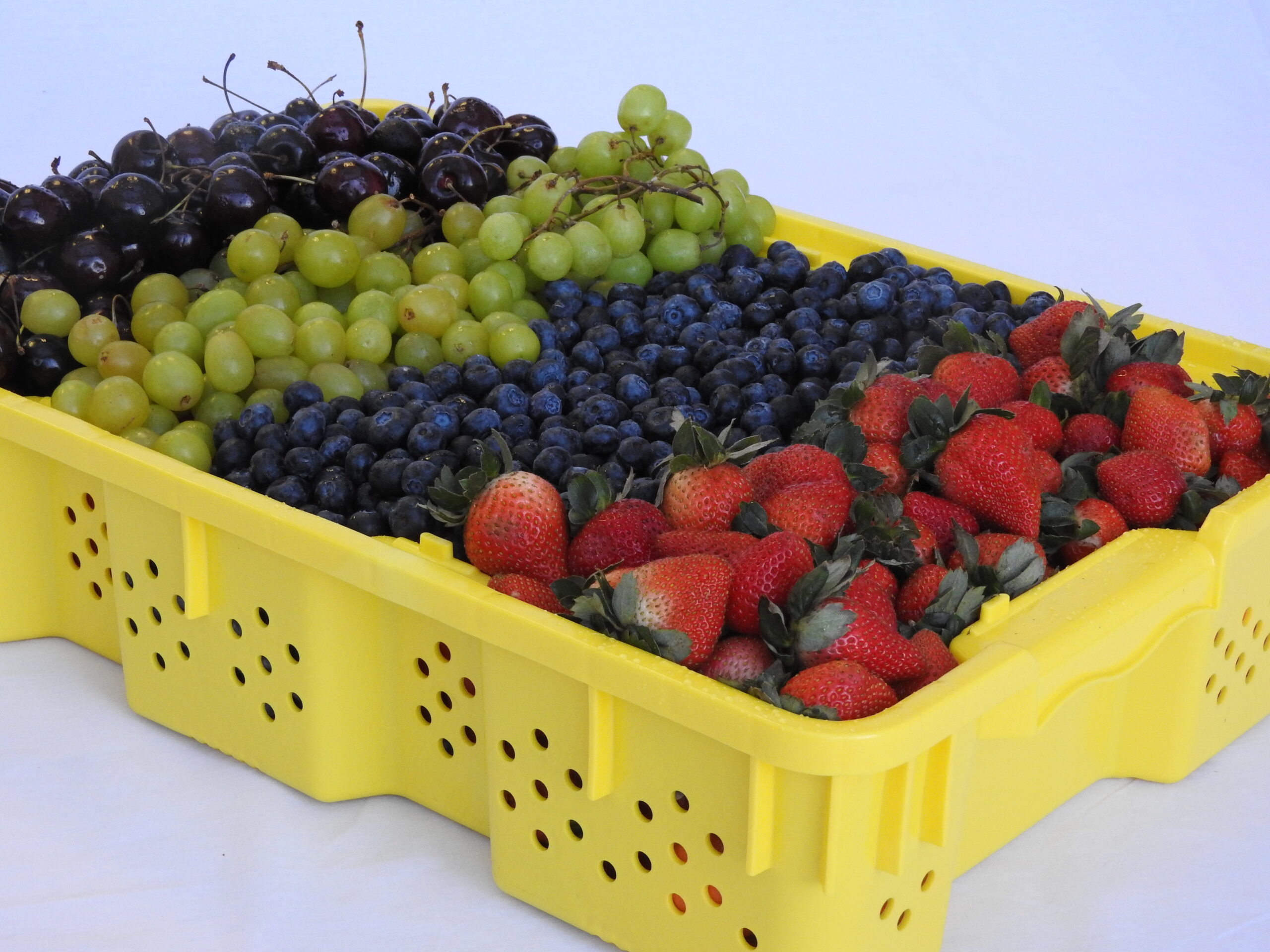
Our Thunderbird berry tray with dividers.
ISPM 15 relates to the regulation of wood packaging material in international trade. This requires wood packaging material to be treated for pests and then stamped with a mark of compliance [19]. With over 180 countries complying with these regulations, many farmers opt for the more durable, hygienic, and cost-effective option of reusable agriculture transport containers.
Hygiene, Sanitation, and Food Safety of Reusable Plastic Containers for Agriculture
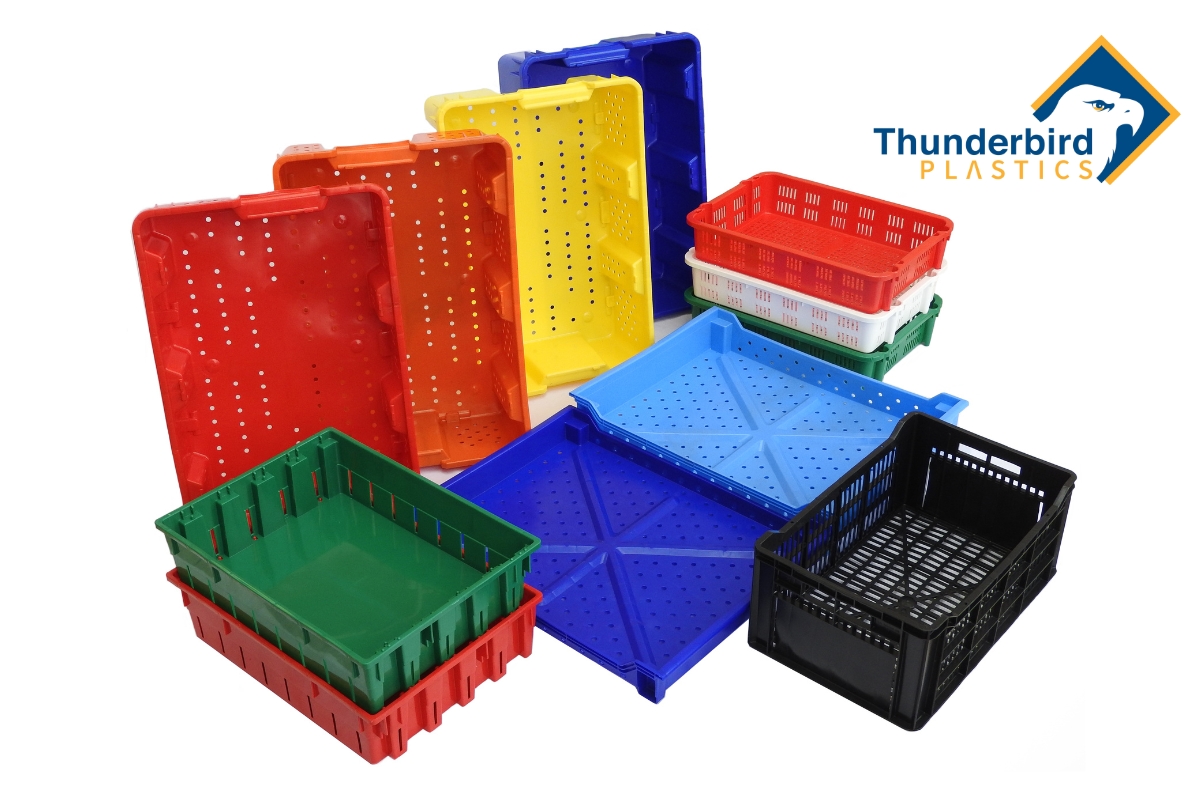
Our high-quality HDPE agricultural crates have non-porous surfaces that are easy to wash and sanitize. They can safely come into contact with food products without any leaching or odors.
Ventilation and Stackability
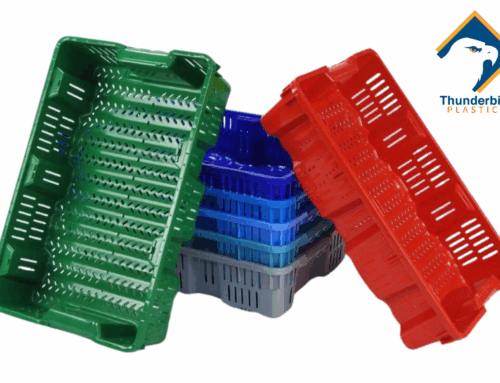
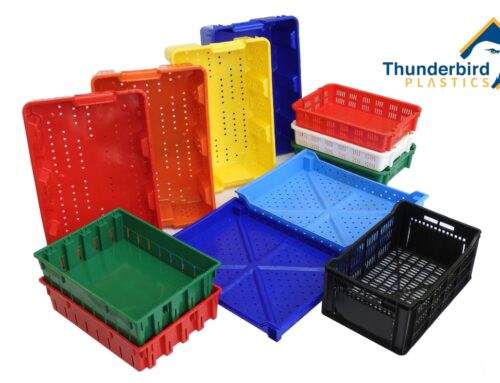
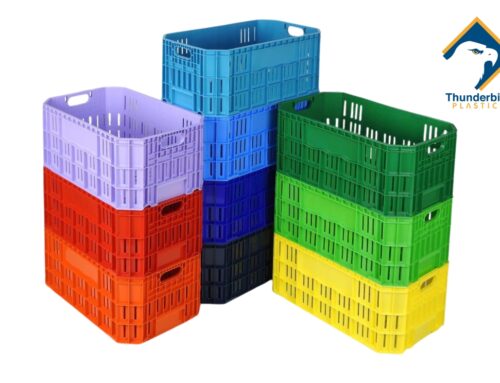
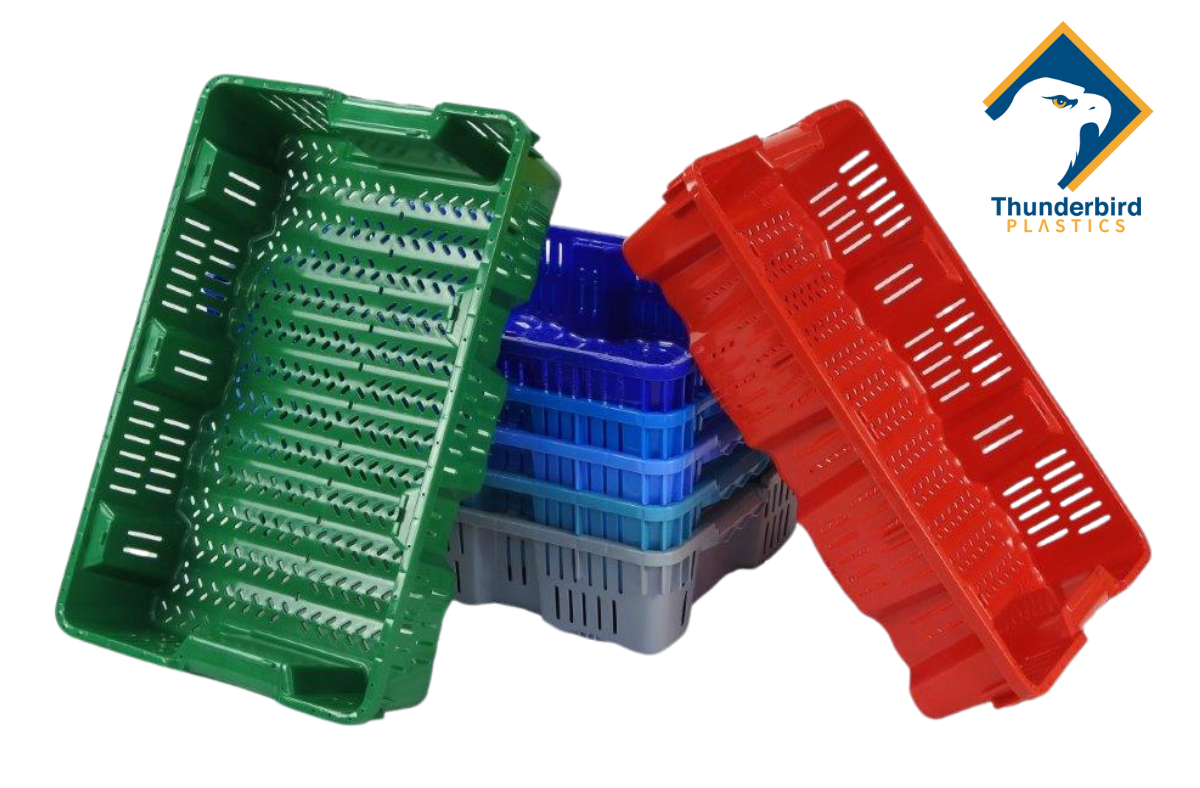
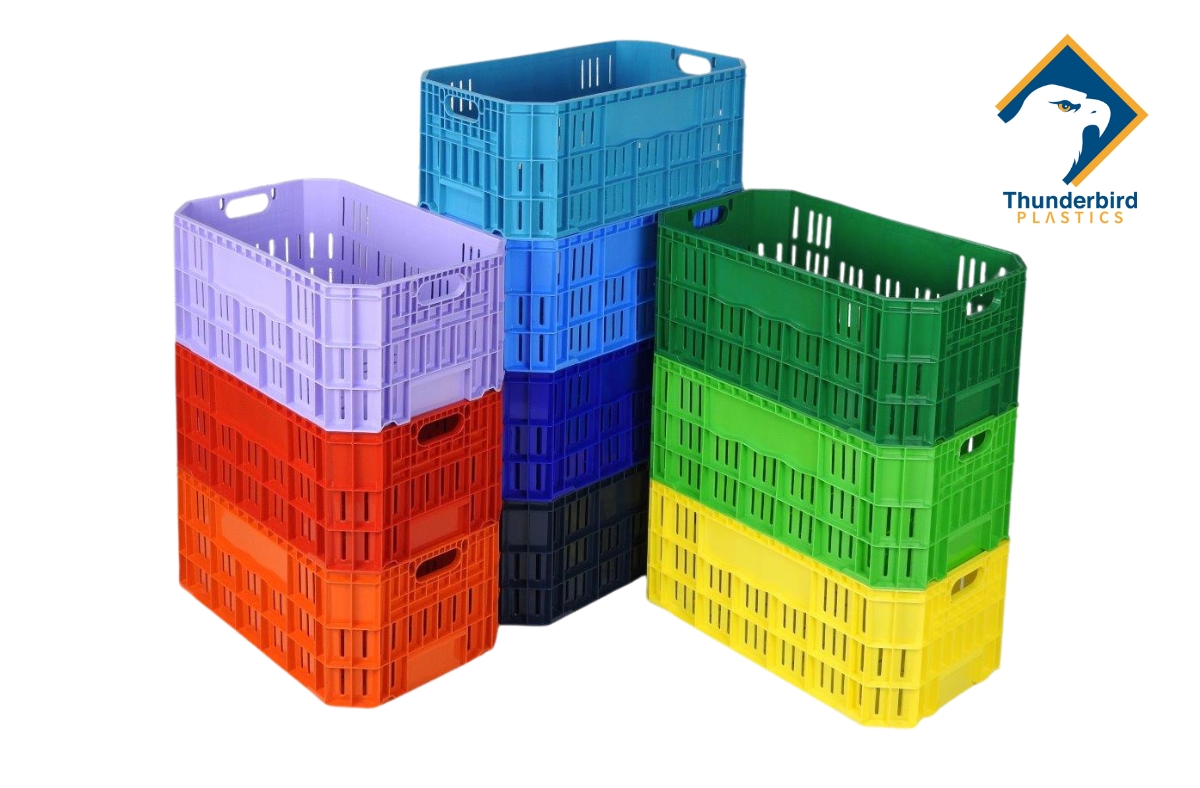
With optional degrees of ventilation, our containers are engineered to provide our customers’ shipments with the optimal airflow in mind. The superb stackability protects fruit and vegetables against physical damage while allowing additional airflow between containers.
Fresh Fruit and Vegetable Exports to the U.S. and Canada
With the recent and emerging tariffs, as well as stricter food safety enforcement from both Canada and the U.S., trade dynamics can be tough to keep track of. By staying on top of commodity-specific tariff status and documenting requirements, farmers can keep their supply chain moving smoothly. Thunderbird Plastics is pleased to be part of the solution by offering high-quality agricultural transport and storage containers for fresh fruits and vegetables.
Looking for agricultural containers that simplify export compliance? Call us today at 888.77T.BIRD or email us at info@thunderbirdplastics.com.
References
[1] https://cpma.ca/industry/trade-and-commerce/canada-us-produce-trade
[2] https://cassels.com/insights/another-temporary-reprieve-no-tariffs-on-usmca-compliant-goods-until-april-2-2025/
[3] https://www.whitehouse.gov/fact-sheets/2025/07/fact-sheet-president-donald-j-trump-amends-duties-to-address-the-flow-of-illicit-drugs-across-our-northern-border
[4] https://www.ctvnews.ca/politics/article/canada-to-remove-countertariffs-on-american-goods-amid-ongoing-trade-war-carney/
[5] https://www.reuters.com/world/americas/canada-remove-many-retaliatory-tariffs-us-goods-says-carney-2025-08-22/
[6] https://inspection.canada.ca/en/importing-food-plants-animals/airs#a21
[7] https://inspection.canada.ca/en/exporting-food-plants-animals/food-exports/requirements-library/united-states-america-fresh-fruit-and-vegetable
[8] https://www.fda.gov/food/food-safety-modernization-act-fsma/fsma-final-rule-foreign-supplier-verification-programs-fsvp-importers-food-humans-and-animals
[9] https://crimsonlogic-northamerica.com/importing-food-and-produce/
[10] https://www.epa.gov/pesticide-tolerances
[11] https://pubmed.ncbi.nlm.nih.gov/15330554/
[12] https://nwhort.org/wp-content/uploads/2014/10/FreshFruitLabelingManual-rev-0721141.pdf
[13] https://en.wikipedia.org/wiki/Fair_Packaging_and_Labeling_Act
[14]https://extension.msstate.edu/publications/country-origin-labeling-agricultural-products
[15] https://www.aphis.usda.gov/plant-imports
[16] https://www.aphis.usda.gov/plant-imports/treatments
[17] https://inspection.canada.ca/en/exporting-food-plants-animals/food-exports/cold-storages-and-export-certification
[18] https://www.ippc.int/en/
[19] https://en.wikipedia.org/wiki/ISPM_15